
The $10 Billion Blind Spot: Why Industrial Cooling Is Wasting Energy You Didn't Know Existed
Walk into almost any large cold storage facility or food processing plant, and you'll hear the same sound: the low hum of pumps pushing coolant through miles of pipe. What you won't see is how much of that electricity is doing nothing useful.Industry estimates suggest that pumping energy acc···

Why the Sun Never Sets on Clean Energy: How Thermal Storage Is Solving Solar’s Biggest Weakness
Solar power has long faced one stubborn problem: the sun doesn’t always shine. But what if we could store not electricity, butheat itself— and use it hours after sunset, or days later when clouds roll in?That’s exactly whatGlacier Coolanthas set out to prove. Inside their labs, engineers have bui···

Heat Transfer Fluids in Controlled Atmosphere Storage: Glacier Coolant Supports Premium Produce Preservation
Controlled Atmosphere (CA) storage is one of the most advanced technologies for preserving fresh produce. By combininglow‑temperature controlwithprecise adjustment of the storage atmosphere, CA rooms can significantly extend the shelf life of fruits and vegetables while maintaining quality and redu···

Breathing New Energy into Batteries
From smartphones to electric vehicles, batteries are the silent workhorses of modern life. Yet one of their biggest enemies is as ordinary as it is unavoidable:heat.Excessive temperatures degrade battery performance, shorten lifespan, and in extreme cases, create safety risks. As demand for higher e···

Solar Cooling Meets Heat Transfer Fluids: Glacier Coolant on the Path to Zero‑Carbon Air Conditioning
As the world pushes toward carbon neutrality, solar energy is taking center stage — not just for electricity generation, but for cooling as well.Solar coolingtechnology captures sunlight to produce cold, offering a promising alternative to conventional air conditioning systems that rely on grid pow···

Phase Change Materials: The Hidden Upgrade That Makes Refrigerators Smarter and More Efficient
For most households, the refrigerator is the single biggest consumer of electricity in the kitchen. It runs 24/7, cycles on and off hundreds of times per day, and faces two fundamental challenges that drive up energy bills:Peak-hour operation– Refrigerators work hardest during the day, exactly when···
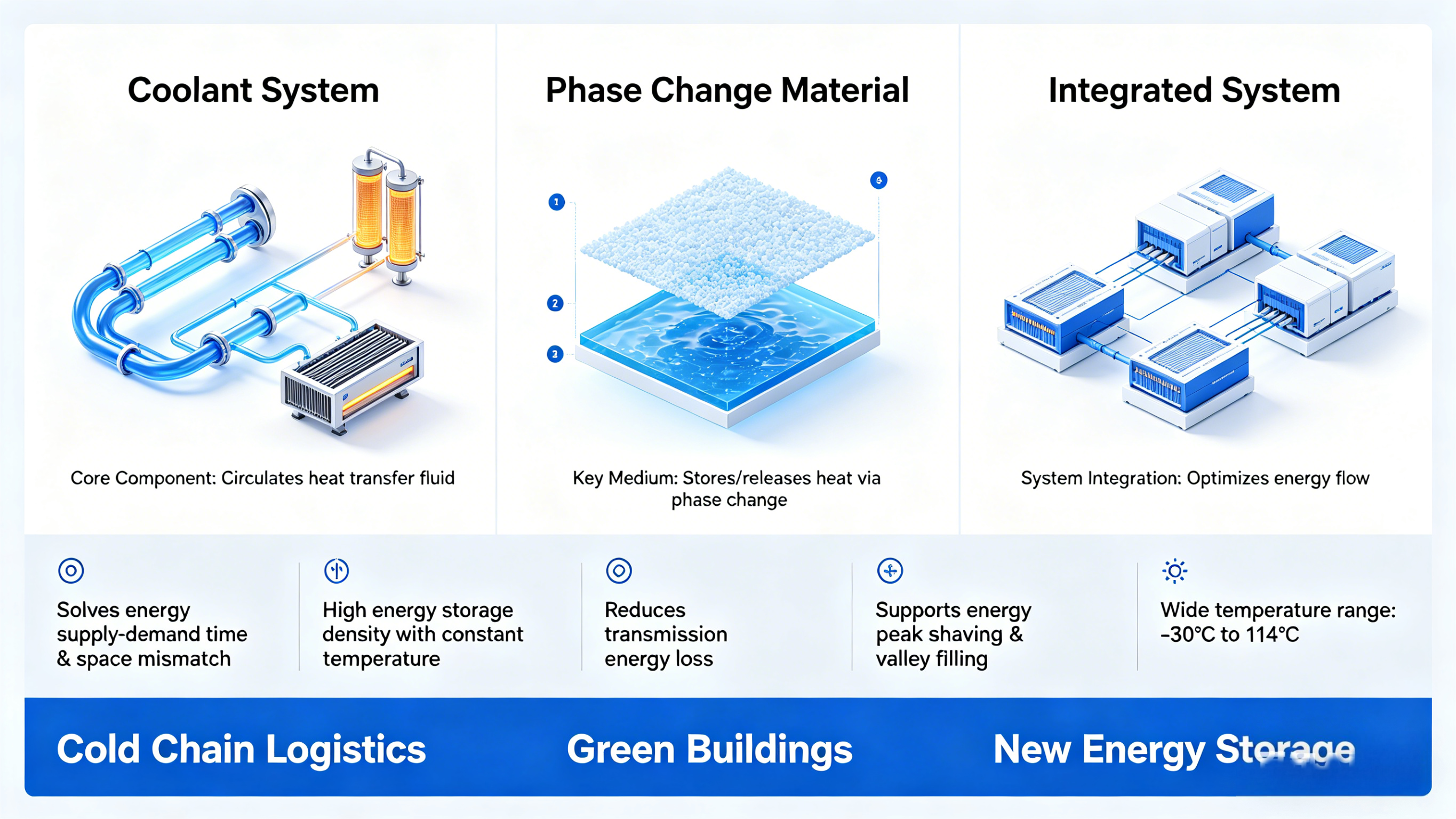
Integrating Storage and Transport: Glacier Coolant Introduces a New Paradigm for Energy Efficiency
The global push toward carbon neutrality is reshaping how industries consume and distribute energy. Traditional cooling systems, while functional, suffer from a fundamental limitation: they can move cold, but they cannot store it. Once the chiller stops, the cooling stops.Glacier Coolantis bridging ···
Goodbye to High Energy Bills and Spoiled Goods: How Phase Change Materials Are Rewriting the Cost Logic of Cold Chain Logistics
For decades, cold chain logistics has faced two persistent enemies:soaring energy costsandproduct spoilage from temperature fluctuations. Traditional refrigeration — powered by diesel or electric compressors — has long been the default solution. But a quieter, smarter alternative is rapidly gainin···
Organic and Composite Phase Change Coolants: Glacier Coolant Explores the Alternatives
In the first part of this series, Glacier Coolant examined inorganic phase change coolants — ice, hydrated salts, dry ice, and liquid oxygen. Now, we turn toorganicandcompositephase change materials (PCMs), which offer distinct advantages and trade-offs for thermal storage applications.Organic Phas···
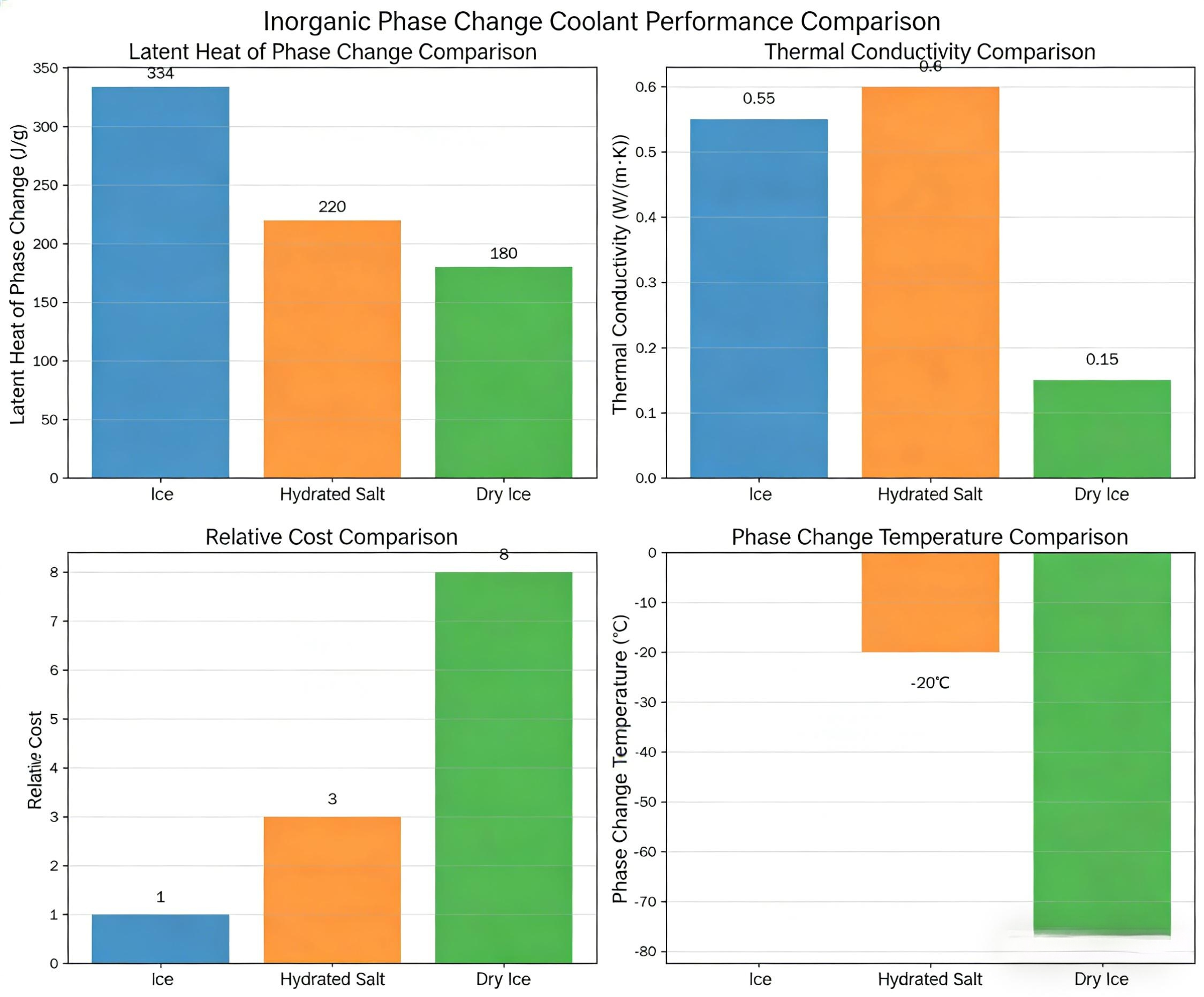
Inorganic Phase Change Coolants: Glacier Coolant Breaks Down the Pros and Cons
Phase change coolants — also known as thermal storage materials — are broadly classified into three categories based on their chemical composition: inorganic, organic, and composite. Each type offers distinct advantages and limitations in terms of latent heat, thermal conductivity, supercooling te···