Choosing a Secondary Refrigerant for a Carbon-Steel Brine System: A Five-Point Spec Memo
A spec memo for low-temperature chemical plants: what a secondary refrigerant must prove on carbon steel, plate heat exchangers, hidden costs and monitoring before you sign.
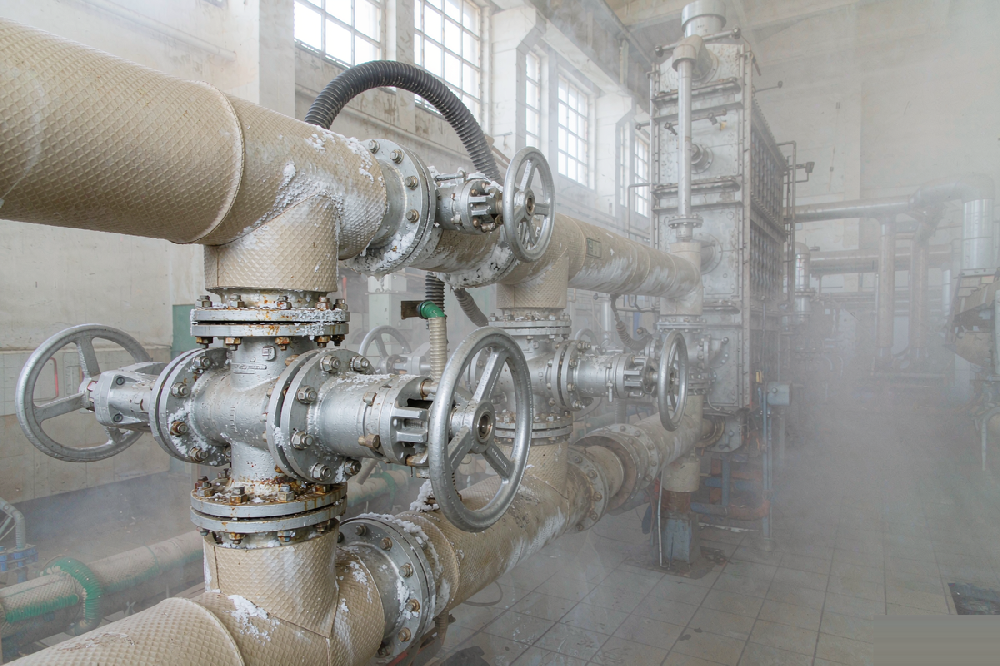
A chilled brine system in a fine-chemical plant looks simple on paper. A chiller, a storage tank, pumps, and a network of carbon-steel pipe. The fluid inside is usually an inhibited ethylene glycol solution, picked to hold a -10 °C process without freezing. Most buyers compare price per litre and freeze point, then sign.
That comparison misses the part that costs the most. The fluid runs through carbon steel for years. What it does to that steel decides your maintenance schedule, your plate heat exchanger performance, and your hazardous waste bill. This memo lays out five points to settle before you choose a secondary refrigerant for such a loop. Glacier Coolant has supplied industrial coolants to plants like yours for a long time, and most of what follows comes from the questions those plants asked us rather than from brochures.
Point 1: freeze margin is the entry ticket, not the decision
Every brine system needs freeze protection. That part is arithmetic. A -10 °C process with a -15 °C evaporator needs a fluid whose freeze point sits well below both, with margin for cold spots and startup transients.
Standard inhibited ethylene glycol handles this easily. Inhibited propylene glycol does too, at a slightly higher concentration, and is the usual pick where food or pharma products share the building. So freeze point cannot be the deciding criterion. Every serious vendor passes this test. Treat it as an entry ticket. The real sorting happens in the next four points.
Point 2: the metal list decides the corrosion question
Carbon steel is the dominant material in these loops. Pipe, tank shells, pump casings, vessel walls — mostly plain carbon steel, with some stainless and copper alloys at the chiller. Glycol-water mixtures are corrosive to carbon steel by nature. Oxygen dissolved in the fluid attacks the metal. The inhibitor package is what stands between the two.
This is where quotes diverge. "Inhibited" is not a standard. One package may protect copper well and carbon steel poorly. Another may pass a bench test but wash out over two years of service. The question to put to each vendor is narrow: what corrosion rate do you document for carbon steel in this exact fluid, over what duration, and how is it measured?
A fluid engineered for this duty answers with a number and a method. Glacier Coolant formulates its LM series against multi-metal loops, with long-term film stability on carbon steel treated as the starting requirement rather than a late addition. The inhibitor package is matched to the metal list you actually have, not to an average loop that does not exist. Ask for the corrosion figure and the method that produced it. Ask which metals were in the test, and for how long. A supplier who can answer those three without reaching for a brochure is describing a fluid. One who cannot is describing a price.
Point 3: fouling in plate heat exchangers is where corrosion gets expensive
Corroded iron does not stay put. Rust particles travel with the flow. They settle at bends, valves, and dead legs. In a plate heat exchanger, the narrow channels clog first. Pressure drop rises. Heat transfer falls. The chiller runs longer to deliver the same cooling, and the downstream process feels it.
The pattern is well documented in plants running plain glycol on carbon steel: deposits build at the high points and the exchangers, flow resistance creeps up, and pump operation turns unstable. None of this shows up in the purchase price. All of it shows up in year two and three.
| Failure chain step | What you see | What it costs |
|---|---|---|
| Corrosion deposits form | Dark fluid, sludge in strainers | Minor, ignored |
| Plate exchanger partly clogs | Pressure drop rises, approach temperature widens | Longer chiller run hours |
| Exchanger blocks | Process cooling falls off | Reduced load, unplanned wash or replacement |
| Pump runs rough | Vibration, seal wear | Repair labour, spare parts |
A secondary refrigerant that keeps corrosion products out of the loop protects the exchanger, not just the pipe. That is a heat transfer fluid decision, and it belongs in the spec.
Point 4: price per litre is the smallest number in the comparison
A cheap inhibited glycol and an engineered industrial coolant can differ by a modest amount per litre. The lifetime gap is much wider. Count what corrosion actually bills you:
| Cost line | Driven by |
|---|---|
| Annual tank and line cleaning | Corrosion sludge volume |
| Hazardous waste disposal | Rust sludge and spent fluid classified as waste |
| Manual labour during overhaul | Cleaning scope that repeats every year |
| Top-up fluid | Fluid lost with sludge and leaks |
| Early equipment ageing | Erosion and under-deposit corrosion |
| Lost production | Heat exchanger capacity loss at peak |
A fine-chemical plant we know ran a chilled system on conventional inhibited glycol for years. Every overhaul, crews cleaned the brine tank and hauled out more than half a tonne of rust sludge. The waste disposal cost and the labour were budgeted as normal. When the plant switched the loop to Glacier Coolant LM-4, a modified polyol compound coolant built for carbon-steel service, the sludge source shrank instead of being managed. The details of that site stay confidential, but the shape of the bill is common enough to plan for.
The lesson is not that everyone must switch products. It is that the price comparison is incomplete until the disposal and downtime lines are on the same page as the price per litre.
Point 5: name the monitoring metric in the same breath as the fluid
A specification that ends at "supply fluid" is unfinished. The plant needs a number to watch that tells whether the corrosion program is working. For carbon-steel glycol loops, total iron in the circulating fluid is that number. Rising iron means active corrosion somewhere upstream. Falling iron means the film is holding.
Write the metric, the sample point, and the frequency into the spec alongside the fluid. Then the fluid supplier has a shared scoreboard with the plant. Our own service teams use exactly this reading when we support a loop, and we describe the routine in the companion piece on total iron monitoring.
| Spec item | Example wording |
|---|---|
| Fluid | Modified polyol compound coolant, freeze point 15 °C below lowest process temperature |
| Metal compatibility | Carbon steel, stainless steel, copper alloys, documented corrosion data |
| Monitoring | Total iron in circulating fluid, monthly sample at pump discharge |
| Response line | Rising trend over two consecutive samples triggers joint review |
Where LM-4 sits on these five points
LM-4 is a modified polyol compound coolant, developed for exactly this class of loop: mixed metals, low process temperatures, and long service intervals. It covers the freeze margin of a conventional inhibited glycol, then adds the part most packages skip — long-term film stability on carbon steel under flow. When you compare candidates, ask for corrosion numbers measured under flow rather than in a static beaker. Bench results and loop results are not the same thing, and the gap between them is where the maintenance budget goes.
For loops where any product contact risk exists, inhibited propylene glycol variants are available and the same five points apply unchanged. The chemistry changes; the checklist does not.
What we send back with a quote
A quote from us carries the five points above as filled lines: freeze data, metal compatibility with corrosion numbers, fouling behaviour, a lifecycle cost sketch, and the monitoring metric with a sample plan. You staple it into your spec and the comparison across vendors becomes honest.
FAQ
Is inhibited ethylene glycol safe for carbon steel piping?
Plain inhibited ethylene glycol slows carbon steel corrosion but does not stop it under all service conditions. Film-forming packages vary widely. Ask for documented carbon steel corrosion data for the specific product, at your working temperature, before relying on the word "inhibited".
Why do glycol brine systems clog plate heat exchangers?
Corrosion particles from carbon steel surfaces travel with the flow and settle in the narrow channels of plate exchangers. Deposits raise pressure drop and cut heat transfer. Fixing the corrosion source protects the exchanger.
Can I use inhibited propylene glycol instead of ethylene glycol?
Yes, where lower toxicity matters, such as sites with food or pharma exposure. Propylene glycol needs somewhat higher concentration for the same freeze point and costs more per litre. The five spec points in this memo apply to both chemistries.
What is the hidden cost of a cheap industrial coolant?
Sludge cleaning, hazardous waste disposal, overhaul labour, extra top-up, early equipment ageing, and lost production during capacity loss. These lines usually dwarf the per-litre saving within a few years.
What concentration of ethylene glycol do I need for a -10 °C process?
Enough for freeze margin below the coldest point in the loop, typically the evaporator, not just the process set point. A common rule is a freeze point 10 to 15 °C below the lowest metal temperature the fluid will touch.
How often should I test a brine loop for corrosion?
Monthly total iron reading is a practical baseline for carbon-steel loops, with inhibitor concentration and pH alongside. Trend direction matters more than any single reading.
What does "modified polyol compound coolant" mean?
It is a glycol-family fluid whose base and inhibitor package are compounded for specific metal lists and temperature bands, rather than a commodity glycol with a generic inhibitor added. LM-4 is one example built for carbon-steel chilled systems.
Do you supply documentation with the fluid?
Yes. Freeze curve, metal compatibility data with corrosion rates, safety data sheet, and a suggested monitoring plan. Batch records are available for traceability.
Can you take over an old loop that already has sludge?
A takeover starts with a flush plan and a fluid analysis, then a fill with the engineered product and a monitoring schedule. Expect the first two samples to tell you whether the cleanup is holding.
Bring the memo to your next review
Send us your process temperature, your metal list, and your loop volume. We will send back the five-point check sheet filled for your case, plus the corrosion data behind it. That is the fastest way to turn this memo into a signed specification.
About Glacier Coolant
Glacier Coolant is the industrial coolant brand of Chaoyang Guangda Chemical Co., Ltd., The company formulates secondary refrigerants and industrial cooling fluids for mixed-metal loops. See the product collection for the full range, or read how an inhibited glycol differs from an engineered coolant and how we guide selection by temperature.