
Corrosion in Data-Centre Secondary Loops: The Leak You Don't See Until It's Too Late
In a cold-plate loop the fluid sits a millimetre from live components. A leak is the disaster switch, and corrosion is the hand on it. What a secondary-side fluid must do to keep that switch off.
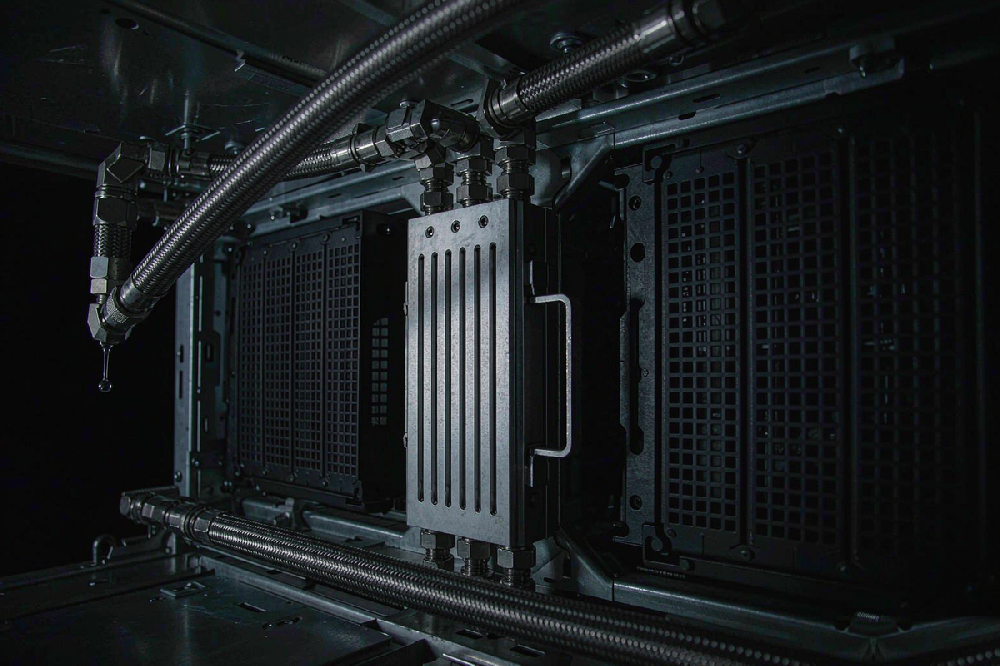
A cabinet goes dark. The board is wet. Somebody is standing in a cold aisle with a torch, asking how a loop that tested fine last quarter put liquid onto live hardware. The useful way to answer that question is backwards. Not "what failed" but "what step back from this failure was already wrong, and how many steps back does the trail go". At Glacier Coolant we walk that trail in the same order every time, because the order tells you who owns the fix The fluid reached the live side. That is the whole event, and everything upstream of it is detail. A cold plate is a metal block with channels cut through it. On one side of the metal runs coolant. On the other side sits a chip and a board. The wall between them is thin by design, because thin walls move heat well. So a breach does not need much metal loss. Once the wall opens, the consequences run from an alarm and a controlled shutdown through to a short, an arc, and a lost cabinet. This is why the secondary loop gets specified differently from every other loop in the building. The fluid here is not primarily a heat mover. It is a corrosion control system that also happens to move heat. Two paths, and they are not equally obvious. The first is the plate itself. The wall thins from the inside, over months, in one spot, until it opens. Nobody sees the thinning because the channel is inside the metal and the metal is inside the rack. The second path is the fitting. The plate gets the attention in every specification review. The seals get the blame later, at the incident. A compression fitting, a quick-connect, a gasket between a manifold and a plate — all of them are leak paths, and all of them are more visible than the channel wall, which is why they are usually found first and specified last. That second path matters more than most people expect. A fluid can protect the metal perfectly and still lose a loop through a gasket it swelled or hardened. Now the trail reaches the fluid, and the question changes shape. It is no longer "why did it leak" but "why did the metal lose thickness at all". Cold plates are usually a mix of copper and aluminium. The two often sit in different legs of the same loop. That arrangement is a galvanic couple by design, and a couple is where pitting likes to begin. The inhibitor package has to protect both metals at the same time. A package tuned for copper can leave aluminium bare, and aluminium is the one that tends to be assumed away in a wetted list nobody wrote down. The same step back also catches stability. An inhibitor is consumable — it gets used up doing its job. A pH that drifts acidic in one corner of the loop invites pitting there. A biology count that climbs seeds a film, and a film hides corrosion underneath it. None of those is a headline feature. Together they decide whether the corrosion defence still works in year five or only worked at commissioning. One more step back and the trail reaches a document. Somebody wrote a secondary-side specification that named a base fluid and a conductivity target. It may not have named the metals. It may not have named the seals. It may not have said what happens at top-up. Nothing about that is unusual. Schedules are short and circulate fast. But the walk-back nearly always terminates in one of those three gaps, and the fix is a clause rather than a product. Read that table from the bottom up and it becomes a prevention plan. Read it from the top down and it becomes an incident report. This is the part that surprises people mid-investigation. The plate and the seal fail for different reasons and they are guarded by different clauses. Neither clause is expensive. Both are routinely missing. Further back than people expect, and less central than they assume. Conductivity earns its place on the dashboard. It is a proxy for how much ionic material the fluid is carrying, and the industry commonly references around 1500 μS/cm as a service red line, derived from the clearance and creepage logic in equipment safety standards. Cross it and the fluid stops behaving like a protector. But in the walk-back, conductivity is the last layer, not the first. By the time a high number matters, liquid is already where it should not be. The layer that actually prevents the event sits further upstream: suppress the corrosion, keep the seal compatible, hold the chemistry steady. Treat a low conductivity target as redundancy behind three defences that already did their work. That is the honest ordering, and it is also the ordering that keeps a specification from spending its whole budget on the number that is easiest to measure. Four layers, and only the fourth one is easy to put on a dashboard. Specifications that buy the fourth and skip the first three are buying the alarm rather than the prevention. Send us the wetted-material list for your cold plates and the seal materials in the loop. We match a secondary-side grade against both, so copper and aluminium are protected together and the gasket is not the weak link. Then we analyse a sample and write down what healthy looks like for that loop. Later samples get compared against it, and what we report is the drift rather than the absolute reading. If you would rather start with the specification than with the sample, we will review the clause list instead. Nine times out of ten the missing line is the seal. Why is coolant leakage dangerous in a cold-plate loop? Because the fluid runs a millimetre from live chips and boards. A breach puts liquid where it should never be, risking alarm, shutdown, short circuit or worse. How does a secondary coolant prevent corrosion and leaks? By suppressing corrosion across the mixed metals at the source, staying compatible with the seals so they do not become a second leak point, and remaining stable so those defences last. What conductivity is safe for data centre coolant? The industry commonly cites around 1500 μS/cm as a service red line. The stronger defence is preventing the plate from corroding open in the first place. Do copper and aluminium in one loop always corrode? Not always, but they form a galvanic couple, and pitting often starts there. The inhibitor must protect both metals together, and the grade should be selected for aluminium where plates include it. Is pH stability really part of corrosion control? Yes. A locally acidic drift invites pitting, especially on aluminium. A held buffer window keeps the inhibitor working instead of being consumed by acidity. Can the seals leak even if the metal does not? They can, and often do. A fluid that swells or hardens EPDM, FFKM or PTFE seals trades one leak point for another, which is why seal compatibility is specified alongside corrosion control. Should I sample the secondary loop as often as the primary side? Follow published equipment guidance: about every six months on high-density AI loads, about annually on general service. Test after every top-up or repair too, and baseline at commissioning. Who owns leak prevention, the operator or the fluid supplier? The operator owns the loop, the seals and the make-up discipline. We own the fluid specification, the material matching and the sampling analysis. Most leak paths sit on the loop side of that line.One step back: how the fluid got out
One step further back: the chemistry
Further still: the specification
Step back from the event What is wrong at that step Who owns it Board is wet The breach has happened Nobody — it is the incident Plate or fitting opened Wall thinned, or seal degraded Fluid specification, and seal compatibility Metal lost thickness Inhibitor consumed, couple unprotected Grade selection against the wetted list Chemistry drifted Top-up, oxygen ingress, biology Operating discipline and sampling Specification was thin Metals or seals never named The spec writer, before anything was bought Two leak points, and the walk-back finds both
Leak point What opens it The clause that closes it Cold plate wall Localised corrosion, galvanic couple Name the wetted metals, match the grade to aluminium Fitting or gasket Swelling, hardening, wrong elastomer Name the seal materials, confirm compatibility Where conductivity sits in this sequence
Defence layer What it does What you would see if it failed Metal coverage in the grade Stops the couple attacking aluminium Wall thinning, then a pinhole Seal compatibility Keeps the joint closed Weeping at a fitting, then a drip Chemistry stability Holds pH and impurity levels Drift in the trend line, not the spot reading Conductivity margin Last line if liquid escapes An alarm, after the leak What we do from here
FAQ