
Cold Storage: Where the Lost 15–25% Goes
A cold store that reads three degrees warm is a compressor working overtime. Most of the 15–25% a drifting loop wastes sits in flow, tank layout and concentration — long before the product feels it.
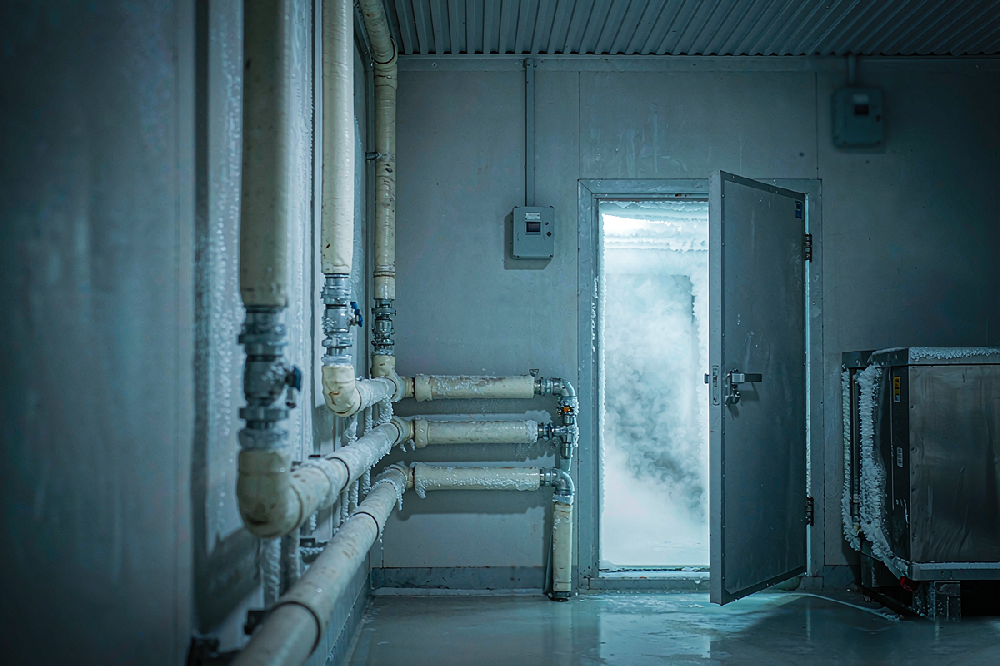
A cold store sized for minus eighteen reads minus fifteen, and the compressor runs longer to close the gap. The gap is small in degrees and large in money. Most of what a cold store loses, it loses before the product ever feels it — in flow, in tank layout, and in a concentration nobody checked this season.
Glacier Coolant supplies secondary refrigerants to cold stores, and the energy calls we get rarely start at the machine. They start at the loop. This article follows the 15% to 25% of energy a drifting loop can waste, and shows where it actually goes.
The point is not to sell a different fluid. It is to send the engineer to the right place with the right question, because the right place is almost never the drum. A cold store that reads warm is a loop telling you something in the language of flow and layout, and learning that language is cheaper than a change-out.
The number behind the soft temperature
Across the service records we hold, loops that were allowed to drift off their design point showed energy use 15% to 25% above design. That is not a lab figure; it is what plants paid after the duty slipped. A cold store that reads three degrees warm is not just three degrees warm. It is a compressor working overtime to hold a temperature the loop will not pass.
Where the loss actually sits
The lost energy rarely comes from one broken part. It spreads across the loop, and most of it is invisible from the control room.
| Where the loss sits | What lets it happen |
|---|---|
| Pump and flow | Undersized pump, or a loop laid out so flow will not reach every coil |
| Tank and distribution | No baffle in the buffer tank, so flow short-circuits instead of circulating |
| Concentration | Fluid thinned by make-up, so it carries less heat per litre |
| Envelope and doors | Heat gain at the building the loop must now remove |
| Controls mismatch | Pump running flat out when a slower speed would hold the setpoint |
None of these is exotic. They are the ordinary gaps between a design on paper and a loop in a building, and they add up to the bill before they add up to a complaint.
A flower cold store that read warm
We were called to a flower cold store in southwest China, about 150 tonnes of system fluid, that could not hold its setpoint. The root cause was not the refrigerant. The pipe runs were too small for the duty, and the buffer tank had no baffle, so flow short-circuited and the coils saw uneven temperature. The fix was layout and flow, not a different fluid. The plant had assumed the machine was undersized. It was not; the loop around it was, and the loop was the cheaper thing to fix.
That case is the shape of most cold-store energy calls. The fluid got blamed because it was the thing you bought. The loop was the thing that decided whether the cold arrived. We cover the failure-mode background in our troubleshooting guide from 119 field cases.
Flow first, fluid second
When a cold store reads warm, the first question is flow, not formula. A loop with the right fluid and the wrong pump will still read warm. A loop with a baffled tank and even distribution will hold temperature on a fluid that is merely adequate.
This is why we push clients to check the loop before they blame the drum. The corrosion and loop-care notes cover the metal side; the flow side is simpler to see once you look for it. A thermographic pass on the coils shows the short-circuits the tank hid.
A useful habit is to mark the coils you can reach and read them with a surface probe during a normal run. The ones that read high are the ones the flow skipped. The fix is rarely a new fluid; it is a baffle, a bigger pump speed, or a re-run of the distribution. The probe turns the warm call from a guess into a map.
Concentration is a slow leak of capacity
Make-up thins the fluid. Every top-up with plain water or a weak mix drops the heat it carries per litre, and the compressor answers by running longer. The drift is slow enough that nobody pins it to a date.
A six-month concentration read catches it. So does a regular sampling rhythm, which is the cheapest way to keep the fluid at the band it was bought at. The cold store that samples is the cold store that does not discover the drift in the power bill.
The make-up log is the early tell. A store that tops up often, in small amounts, is thinning its fluid a little each time. A store that tops up rarely, in large amounts, is fixing a leak it has not found. Both logs point at the loop, and both are cheaper to read than the power bill that follows.
What to check before you blame the machine
A short list, in the order we would walk it:
| Check | Why it matters |
|---|---|
| Coil temperatures across the store | Shows uneven flow the control room hides |
| Buffer tank for a baffle | Short-circuit flow wastes pump power |
| Concentration this season | Thin fluid carries less heat per litre |
| Pump curve versus duty | Undersized pump cannot push the flow |
| Envelope and door gain | Heat the loop must remove before it reaches product |
Walk that list and most warm-call causes surface in an afternoon. The machine is the last thing to question, because it is the thing most often blamed and least often at fault.
The fixes, by where the loss sits
Each loss location has a fix that costs attention, not capital. The table below is the one we hand a cold-store engineer.
| Loss location | The fix |
|---|---|
| Undersized pump | Re-rate against duty; sometimes a second speed, not a bigger unit |
| Tank with no baffle | Fit a baffle; redistribute flow to every coil |
| Thin concentration | Re-establish the band from the grade sheet; re-check in six months |
| Envelope gain | Tighten doors and defrost; the loop cannot remove heat the building lets in |
| Controls flat out | Trim pump speed to the setpoint; stop over-pumping |
Most of these are within reach of the plant's own staff. The fluid change-out is the one that usually is not needed, which is why we name the loop first.
Why the control room hides it
The control room sees a setpoint and a compressor run time. It does not see a coil running three degrees warm because flow short-circuited around it. The average temperature can look fine while one corner of the store quietly steals capacity the compressor must make up.
This is why a thermographic pass beats a dashboard. The dashboard reports the mean; the pass reports the coil that is not getting its share. The loss lives in the spread between them, and the spread is exactly what the loop layout decides.
The seasonal rhythm that hides drift
Concentration drift is slow, and slow drift hides in the seasons. A store topped up in summer reads fine through autumn, then struggles in the winter peak when the duty is hardest. The thin fluid that was invisible in mild weather becomes the reason the compressor will not let go.
A six-month read, taken in the same season each year, catches the drift before the peak does. It is the cheapest insurance against a winter call, and it is the step a busy site skips precisely because the store still looks cold.
The payback is quiet
Closing these gaps does not double the cooling. It returns the 15% to 25% the loop was spending to compensate for itself. For a cold store on a thin margin, that return is the difference between a good year and a defensive one, and it costs layout attention, not a capital spend. It is the kind of return that does not show up in a single invoice, but it shows up in every one after.