
Which Side Does Your Coolant Take? Tube Side, Shell Side, and Where the Resistance Sits
Putting a secondary refrigerant on the wrong side of a shell-and-tube exchanger costs efficiency that extra surface area will not buy back. The placement rules, and what each side can then do.
Ask which side of a shell-and-tube exchanger the coolant should run on and the honest answer, more often than anyone admits, is "whichever side the drawing shows". That is not a drawing decision. It is a fluid decision, and getting it backwards costs efficiency that no amount of added surface area buys back. Glacier Coolant works on the fluid side of circulating loops, and this is one of the questions that reaches us most often from the exchanger end of those loops. Three answers up front. Put the coolant on the tube side when it runs at high pressure, fouls, corrodes, or can solidify. Put it on the shell side when it is viscous, when pressure drop is tight, or when it condenses in service. Once the side is right, improving that side is a structural question — and structural questions belong to the equipment maker, not to us. Heat crossing a tube wall meets resistance in series: the film on one side, the wall itself, the film on the other side, and whatever has deposited on either surface. Add resistances in series and the largest one dominates. Improving a resistance that is already small moves the total very little. That is the whole reason placement matters. In most secondary-refrigerant service, the fluid side is the weak film. The other side is often a refrigerant changing phase, and phase change carries heat across a surface far better than a single-phase liquid does. So the coolant film is usually where the resistance sits — and where attention pays. It also means the order of work matters. Find the weak side first. Then decide how to attack it. Doing it the other way round produces a lot of expensive hardware pointed at the wrong film. Two properties fight each other more often than people expect. A fluid can be viscous enough to argue for the shell and fouling enough to argue for the tubes. When that happens, the fouling argument usually wins, because a shell you cannot clean degrades every year, while a pressure drop you can pump against is a known cost. Most secondary loops run the coolant in the shell, which is why the measures below come up more often on site than the tube-side ones. Both are structural, both belong to the equipment maker, and both work on the shell-side film rather than on the fluid. Two approaches appear repeatedly in that arrangement. Helical inserts between the tubes. The flow is forced into several longitudinal swirling streams instead of running straight down the shell. Fluid near the tube wall moves faster and mixes with fluid from other radii, so the wall film is disturbed continuously. The viscous sub-layer gets thinner, and the film coefficient on the shell side rises. Helical baffles. Instead of segmental plates that push flow across the tube bundle in a zigzag, helical baffles set the flow at an angle to the axis. Fluid sweeps obliquely across the tubes, dead zones behind the plates shrink, and tube vibration drops. A radial velocity component that fluctuates along the axis adds further disturbance and thins the boundary layer. Both do the same thing by different routes: they reduce the thickness of the slow-moving film that the heat has to cross. Neither changes the fluid. Some arrangements put the coolant in the tubes — flooded or falling-film systems among them. The measures change accordingly. Extended surface. Finned or otherwise extended tube increases the area per unit length, which raises total heat transferred. It suits duties where the coolant-side resistance dominates and there is room for the geometry. Swirl and micro-geometry. Spiral tube, or small channels formed in the wall, adds disturbance inside the tube, breaks up the boundary layer and lowers the tube-side resistance. The choice between them is again the equipment maker's call, and it depends on the duty, the fouling allowance and what the cleaning method has to be able to reach. We are not the ones who size or build the exchanger. What we influence is the fluid — and three properties of it decide how well either side performs. Notice what is not on that list: heat transfer coefficient, surface area, baffle geometry. Those are the equipment maker's. What we can do is hand them a fluid whose viscosity, cleanliness and compatibility at the operating temperature are known rather than assumed — and that is usually where the argument about a duty is actually won. If the loop has a temperature problem rather than a heat-transfer one, read the loop before blaming the machine; the fault is often elsewhere. And where the duty runs cold enough that water in the fluid is a risk, what ice blockage does to a loop is the prior question. That last row is the one that saves the most arguments. A fluid change alters the film. It does not add surface area. Viscosity at your operating temperature. Given for the cold end as well as the warm end, because the cold end is where loops fail. A cleanliness target and how to hold it. Where filtration belongs, what to flush before the first charge, and what to sample afterwards. A compatibility read on your metal list. Which metals the inhibitor package is built for, and where a mixed-metal list changes the grade. Where the duty needs a band the standard grades do not cover, the grade list and its temperature bands is where that starts. A short list for the equipment maker. The fluid properties they need in order to place it correctly and size it honestly — handed over in their language, not ours. Selecting a grade is the same discipline as choosing a fluid by temperature band: the duty sets the number, and the rest of the sheet is how well it holds. Should coolant go on the tube side or the shell side? It follows the fluid. High pressure, fouling, corrosion and solidification point to the tubes. High viscosity, a tight pressure-drop budget and condensing service point to the shell. Why does the weaker side control heat transfer? Because resistances add in series. The largest one dominates the total, so improving a small resistance barely moves the result. In secondary-refrigerant service the coolant film is usually that largest one. Can a better fluid fix an underperforming exchanger? Sometimes, and only within the margin the exchanger already has. A fluid change improves the film. It does not add area, so the duty has to be checked against the existing surface first. What does viscosity have to do with which side? Viscous fluid needs flow area, which argues for the shell. But viscosity has to be read at the lowest operating temperature, because that is where it rises steeply and where the pump runs out of head. How do you improve the shell side? Structurally: helical inserts that force swirling flow and thin the wall film, or helical baffles that set flow at an angle to the axis and remove dead zones. Both are equipment-side measures. How do you improve the tube side? Extended surface to add area per unit length, or swirl and micro-geometry inside the tube to disturb the boundary layer. The choice depends on fouling allowance and on what the cleaning method must reach. Who decides the placement, us or the exchanger maker? Both, in sequence. Fluid properties decide which side suits it; the maker decides geometry, area and construction. We supply the properties in a form they can use. Does filtration matter as much as placement? Yes. Deposits add a resistance in series and keep growing. A well-placed fluid with no filtration degrades toward the same place as a poorly placed one. Placement is the cheapest decision in an exchanger and the one most often inherited rather than made. It is worth reopening, because it sets what every later improvement can achieve. The order that works is short. Find the weak side — in secondary-refrigerant service it is usually the coolant film. Place the fluid according to what it actually does at the operating temperature, not at room temperature. Then let the equipment maker attack that side with geometry. Expect the fluid to improve the film, and do not expect it to add area. Glacier Coolant supplies heat-transfer fluids for circulating loops, and we know where our responsibility stops: viscosity, cleanliness and compatibility are ours; area, baffles and construction are not. Tell us the fluid, the temperature band, the flow and the metals it touches. You get back a viscosity window, a cleanliness target, a compatibility read, and a one-page list of fluid properties to hand your exchanger supplier.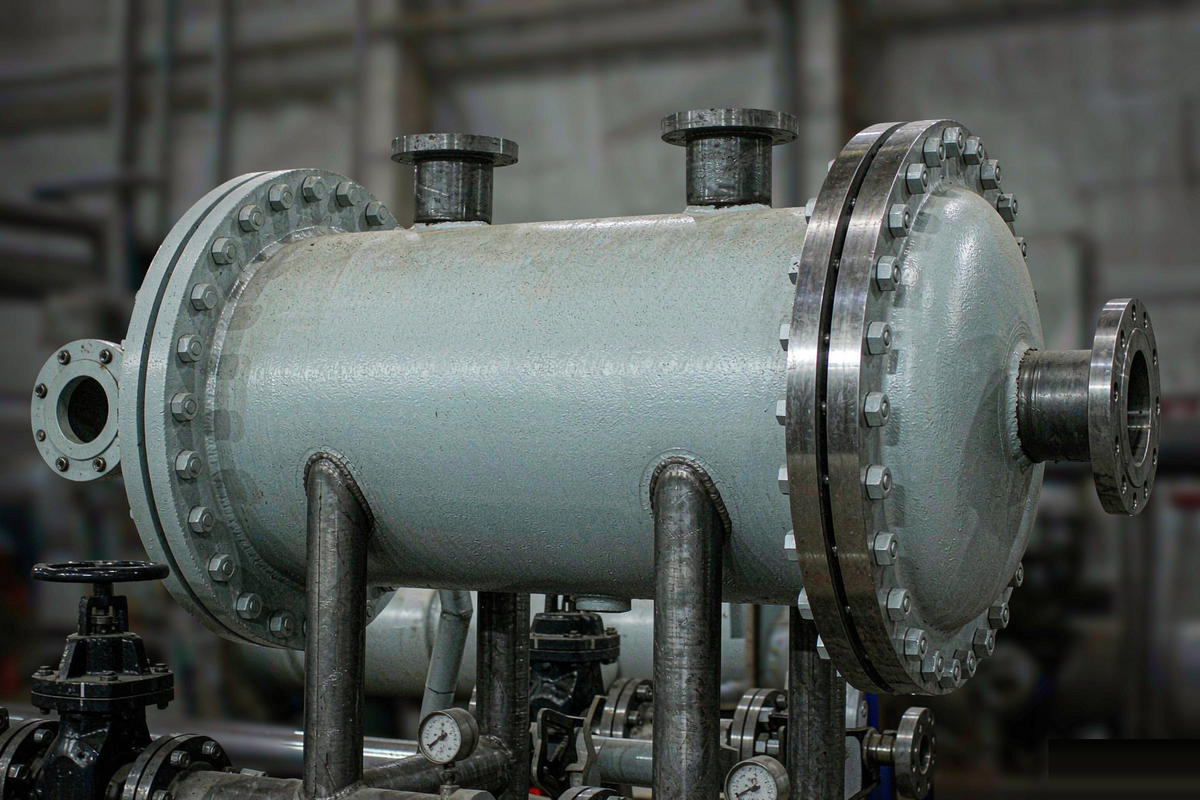
The coefficient follows the weaker side
Where the coolant belongs
Fluid property Put it on Why that side suits it High pressure Tube side Small-diameter tubes hold pressure more economically, and the pressure boundary is easier to manage Fouls or scales Tube side Tubes can be cleaned mechanically, or pulled and replaced. A fouled shell is far more disruptive Corrosive to common alloys Tube side The wetted area that needs an expensive alloy is smaller and easier to specify Can solidify or wax out Tube side Solid deposits are reachable, and the geometry is simpler to clear High viscosity Shell side The shell offers a larger flow area, so thick fluid moves without a punishing pressure drop Tight pressure-drop budget Shell side Lower velocity over a larger cross-section costs less pressure Condenses in service Shell side Condensing vapour is normally handled on the shell, with the liquid draining away Shell side: breaking the boundary layer
Tube side: when the coolant runs inside
What the fluid side decides
Property What it does in the exchanger What you control Viscosity at operating temperature Sets the film thickness and the pumping cost, and it rises steeply as temperature falls Grade choice, and concentration if the fluid is diluted Cleanliness Deposits add a resistance in series, and they grow where velocity is low Filtration, commissioning flush, and a sampling rhythm Corrosion compatibility Corrosion products foul the surface and thin the metal Inhibitor package matched to the metals actually in the loop Four ways this gets got wrong
Mistake What follows The rule that avoids it High-pressure fluid on the shell side Heavy, expensive shell construction, and a pressure boundary that is hard to inspect Pressure argues for the tubes, always Fouling fluid on the shell side Capacity that falls every year, with no practical way to clean it If you must clean it, put it where cleaning can reach Ignoring viscosity at the low end Winter duty collapses; the pump was sized on a warm-day viscosity Check viscosity at the lowest operating temperature, not at room temperature Assuming a fluid change restores a lost duty Disappointment, because the exchanger never had the margin Check the exchanger margin before expecting the fluid to carry it What comes with a fluid-side answer
FAQ
Final thoughts