
Phase Change Materials Reshape Electric Vehicle Battery Thermal Management
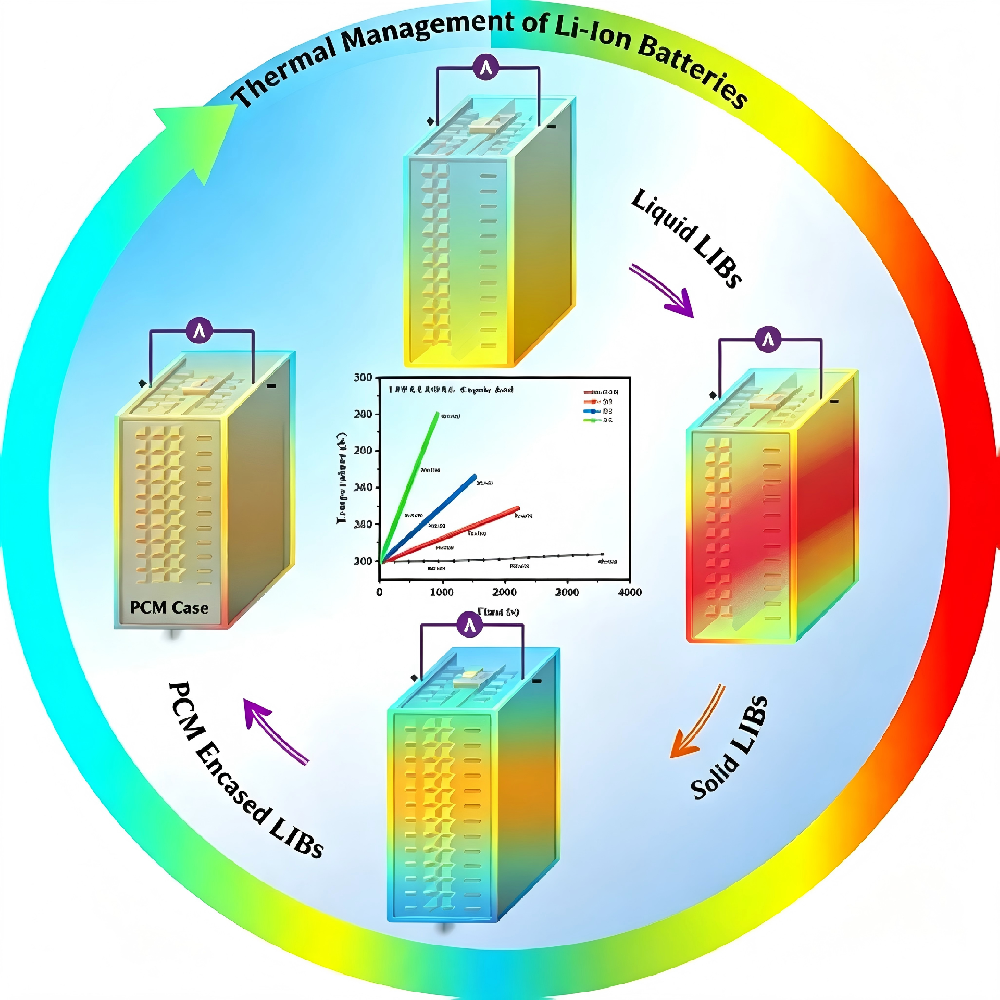
As automakers race to push electric vehicle range past the 400-mile mark, an unassuming class of materials is quietly solving the industry's most stubborn engineering puzzle: keeping lithium-ion batteries in their narrow comfort zone without piling on weight, cost, and complexity.
The numbers tell a story of mounting pressure. Global EV sales exceeded 17 million units in 2024, according to the International Energy Agency, with 2025 projections approaching 20 million. But behind every percentage point of market share growth lies a thermal management problem that has vexed battery engineers for over a decade. Lithium-ion cells perform best between 15 and 35 degrees Celsius. Stray outside that band and the consequences range from reduced range and accelerated degradation to, in worst-case scenarios, thermal runaway and fire.
Traditional cooling systems, relying on liquid coolant loops, refrigerant circuits, or air flow, have carried the industry this far. But as battery packs grow denser, charging speeds climb toward 350 kW, and consumers demand performance that rivals combustion vehicles, conventional approaches are hitting their practical limits. Phase change materials, or PCMs, are emerging as a complementary, and in some applications, alternative thermal strategy that could fundamentally alter how EVs manage heat.
The Thermal Tightrope: Why Battery Temperature Matters More Than You Think
A lithium-ion battery is, in essence, a controlled chemical reaction. Like any chemical process, its speed, efficiency, and safety are temperature-dependent. At low temperatures, below 0 degrees Celsius, the electrolyte becomes viscous, lithium plating can occur during charging, and available capacity drops sharply. Anyone who has tried to fast-charge an EV in a Minnesota winter has experienced this firsthand. At high temperatures, above 45 degrees Celsius, side reactions accelerate, degrading the cathode and electrolyte, shortening battery life, and increasing the risk of runaway.
The challenge is compounded by the fact that batteries generate heat during operation. Discharging at high rates, think hard acceleration on a highway on-ramp, produces significant internal heat. Fast charging, which pushes large currents into the pack in minutes rather than hours, generates even more. A 350 kW charging session can raise cell temperatures by 15 to 20 degrees in under ten minutes if heat is not removed efficiently.
Conventional thermal management systems address this through active cooling. Most EVs on the road today use a glycol-water coolant circulating through cold plates beneath the battery modules, paired with a refrigerant circuit that rejects heat to the outside air. This works, but it has drawbacks. The system adds weight, complexity, and parasitic load. The compressor and pumps consume energy that could otherwise propel the vehicle. In extreme conditions, the cooling system can struggle to keep pace with heat generation, forcing the battery management system to throttle charging speeds or limit power output.
How Phase Change Materials Work in Battery Applications
Phase change materials offer a fundamentally different approach. Rather than actively transporting heat away from the battery, PCMs absorb it passively through a phase transition, typically from solid to liquid. During this transition, the material absorbs a large quantity of latent heat while maintaining a nearly constant temperature. This is the same physics that keeps your drink cold as ice melts, but engineered for precise temperature control.
In battery applications, PCM is typically integrated as a layer or enclosure material surrounding individual cells or modules. When the battery temperature rises to the PCM's melting point, the material begins absorbing heat, holding the battery temperature near that set point for an extended period. Once the vehicle is parked or operating under lighter loads, the PCM re-solidifies, releasing the stored heat to the surrounding environment or an active cooling loop, and resetting the system for the next thermal event.
The choice of PCM is critical. Paraffin waxes, with melting points tunable between 20 and 60 degrees Celsius, are the most commonly studied for EV applications. Their latent heat capacity, typically 150 to 250 joules per gram, far exceeds the sensible heat capacity of water or glycol on a per-weight basis. Salt hydrates offer higher thermal conductivity and density but face issues with subcooling and phase separation. More recently, composite PCMs, paraffin blended with graphite, metal foams, or carbon nanotubes, have addressed the historical weakness of PCMs: low thermal conductivity that limits heat penetration depth.
The Composite PCM Breakthrough
Pure paraffin wax conducts heat poorly, around 0.2 W/mK, which means heat from a cell surface can take considerable time to penetrate deep into a PCM layer. This creates a thermal bottleneck where the PCM closest to the cell melts quickly while the bulk remains solid, reducing effective capacity. Researchers and commercial developers have tackled this by embedding high-conductivity structures within the PCM.
Expanded graphite matrices, for instance, can boost effective thermal conductivity to 5-16 W/mK, a 25-to-80-fold improvement. Metal foams, typically aluminum or copper, achieve similar results while adding structural rigidity. These composites also address leakage concerns, as the matrix holds the liquid paraffin in place through capillary action when the PCM melts. Glacier Coolant's proprietary PCM formulations, developed for industrial thermal management, leverage similar composite approaches to deliver reliable, leak-free performance across thousands of thermal cycles.
Real-World Performance: What Testing Reveals
Laboratory testing and simulation studies have produced consistent and encouraging results. Multiple peer-reviewed studies have evaluated paraffin-graphite composite PCMs with melting points between 35 and 40 degrees Celsius wrapped around cylindrical 18650 cells. Under 3C discharge rates, PCM-equipped modules consistently held peak cell temperatures 10 to 14 degrees lower than air-cooled references and 5 to 8 degrees lower than liquid cold-plate systems. Perhaps more significantly, the temperature difference between cells dropped from roughly 7 degrees to under 2 degrees, dramatically improving pack balance and longevity.
"The most compelling finding wasn't just the peak temperature reduction. It was the thermal uniformity. In a battery pack, the weakest cell determines the whole system's performance. When you can hold every cell within two degrees of its neighbors, you extend pack life, improve usable capacity, and reduce the risk of localized degradation that leads to failure."Glacier Coolant Battery Thermal Engineering Team
Research on PCM under fast-charging conditions has shown similarly promising results. Testing of 21700-format cell packs with PCM thermal buffering maintained temperatures below 45 degrees Celsius during 250 kW charging from 10 to 80 percent state of charge, completing the session in approximately 18 minutes. The same packs without PCM exceeded 52 degrees and triggered battery management system thermal throttling, extending charge time to roughly 27 minutes. The PCM essentially bought the active cooling system time to catch up, smoothing thermal peaks that would otherwise force performance limitations.
| Parameter | Air Cooling | Liquid Cold Plate | PCM Composite | PCM + Liquid Hybrid |
|---|---|---|---|---|
| Peak Temp (3C discharge) | 54.2°C | 48.5°C | 41.8°C | 38.3°C |
| Cell-to-Cell Delta-T | 7.2°C | 5.1°C | 1.9°C | 1.2°C |
| System Weight Penalty | Low | Medium | Medium-High | High |
| Parasitic Power Draw | Low | Medium | None (passive) | Low-Medium |
| Fast Charge Time (10-80%) | 34 min | 27 min | 22 min | 18 min |
Representative values based on aggregated data from multiple published thermal management studies. Actual results vary with cell format, PCM formulation, and system design.
The Hybrid Approach: Where PCM Fits in the Real World
Despite impressive results, pure PCM cooling faces a practical limitation: once the material has fully melted, its heat absorption capacity is exhausted. On a long highway drive in summer, or during consecutive fast-charging sessions, the PCM may not have time to re-solidify between thermal events. This is why most production-oriented designs use PCM not as a standalone solution, but as a thermal buffer integrated with a conventional active cooling system.
In a hybrid architecture, the PCM absorbs transient heat spikes, fast-charging bursts, hard acceleration, stop-and-go traffic, while the liquid cooling system handles steady-state heat removal at a more moderate, efficient pace. This allows designers to size the active cooling system for average rather than peak loads, reducing compressor size, pump capacity, and overall system weight. The PCM acts as a thermal shock absorber, smoothing the demand curve.
Several automakers have explored PCM integration in battery pack designs through patent filings and research publications. Major manufacturers including BMW, Tesla, and Chinese EV makers NIO and BYD have investigated various PCM integration approaches, from structural PCM elements within battery enclosures to PCM-enhanced cooling plate designs. While none of these have reached volume production in their purest form, the trajectory is clear: the industry recognizes that conventional cooling alone cannot meet the thermal demands of next-generation high-energy-density batteries.
Weight: The Inevitable Trade-off
The elephant in the room is weight. A PCM layer thick enough to provide meaningful thermal buffering can add 15 to 40 kilograms to a battery pack, depending on cell format, PCM type, and design. In an industry obsessed with shaving grams, this is not trivial. Every kilogram added reduces range, and range is the metric that sells EVs.
However, this calculation becomes more nuanced when viewed at the system level. If the PCM allows a smaller, lighter active cooling system, eliminates the need for heavy cold plates, or enables faster charging that reduces the required battery capacity for a given use case, the net weight impact can be neutral or even positive. Industry analyses suggest that a well-optimized PCM-hybrid system could reduce total thermal management system weight by 8-12 percent while improving thermal performance, primarily by downsizing the compressor and heat exchanger.
Safety: The Argument That May Drive Adoption
Beyond performance and efficiency, safety may be the factor that accelerates PCM adoption in EV batteries. Thermal runaway, the catastrophic chain reaction where a single cell failure cascades through the entire pack, remains the industry's most feared failure mode. Current mitigation strategies include cell-to-cell barriers, venting channels, and intumescent coatings. PCM offers an additional layer of defense.
When a cell enters thermal runaway, it releases an enormous amount of heat in seconds, raising adjacent cell temperatures above their own runaway thresholds. A PCM layer with a high latent heat capacity can absorb a significant portion of this energy, buying critical seconds or minutes for the battery management system to isolate the failing cell and for occupants to evacuate. While no passive material can indefinitely contain a full-scale runaway event, the delay provided by PCM can be the difference between a contained single-cell failure and a pack-wide conflagration.
"Published abuse testing data indicates PCM can delay thermal runaway propagation by 40 to 90 seconds. In real-world terms, that is the difference between a vehicle fire that starts while parked and one that starts while the driver is still on the highway. Those seconds matter."Glacier Coolant Battery Safety Research Team
Manufacturing and Cost Considerations
The path from laboratory to production line is paved with manufacturing challenges. Integrating PCM into battery packs requires new processes, new materials, and new quality control standards. Paraffin-based PCMs are flammable, which introduces concerns in a battery application where fire safety is paramount. Salt hydrates are non-flammable but face corrosion and leakage risks. Composite PCMs, while addressing conductivity and leakage, add material and processing costs.
Current estimates put the cost of PCM integration at $2-5 per kilowatt-hour of battery capacity, depending on the material system and integration method. For a 75 kWh pack, that translates to $150-375 in additional cost. Whether OEMs can justify this depends on the value placed on improved safety, faster charging, and extended battery life. As PCM production scales and material costs decline, this premium is expected to narrow.
Several companies are working to commercialize PCM battery solutions. Glacier Coolant, with its extensive experience in phase change thermal management for industrial and stationary energy storage applications, is applying its composite PCM expertise to the specific requirements of battery thermal management: precise melting points, high cycle stability, and compatibility with automotive manufacturing processes. The company's composite PCM technology, originally developed for stationary energy storage systems, represents a foundation that can be adapted for the more demanding size, weight, and cost constraints of mobile applications.
The Road Ahead: Predictions for 2027 and Beyond
Industry analysts at IDTechEx forecast that the market for thermal management materials in EV batteries will exceed $12 billion by 2030, with PCMs capturing a growing share. Several factors are converging to drive adoption:
Battery energy density is climbing. Solid-state batteries, silicon anode cells, and high-nickel cathodes all operate in tighter thermal windows, making passive temperature stabilization more valuable.
Charging speeds are increasing. 400 kW and even megawatt charging architectures, already demonstrated by multiple OEMs, will push conventional cooling systems beyond their limits.
Battery safety regulations are tightening. Updated UN regulations and national standards are placing greater emphasis on propagation resistance, where PCM can contribute measurably.
Cost parity is approaching. As composite PCM manufacturing matures and production volumes increase, the cost premium over conventional approaches is shrinking.
The most likely adoption path is incremental. First-generation applications will use PCM as a supplementary thermal buffer in high-performance variants, where the cost premium is most easily absorbed. As the technology matures and costs decline, it will migrate to mainstream models. Within five to seven years, PCM-enhanced thermal management could become a standard feature in premium EVs, much as liquid cooling replaced air cooling a decade ago.
The transition will not be without friction. Automotive development cycles are long, typically three to five years from design freeze to production. Validation requirements for safety-critical components are rigorous. Supply chains for specialized composite PCMs are still nascent. But the underlying physics are compelling, the test results are consistent, and the industry's thermal challenges are not getting any easier.
For an industry built on the promise of clean, efficient, electrified transportation, phase change materials may prove to be the unglamorous enabler that makes the next leap in EV performance possible. Not through dramatic breakthroughs or flashy announcements, but through the quiet, persistent physics of melting and freezing, absorbing and releasing, holding the line on temperature while the world accelerates around them.
This technical analysis was prepared by the Glacier Coolant research desk, drawing on peer-reviewed studies, industry data, and proprietary thermal management expertise. Glacier Coolant develops phase change material solutions for energy storage, automotive, cold chain, and building applications. For technical inquiries or partnership discussions, contact the Glacier Coolant engineering team.