
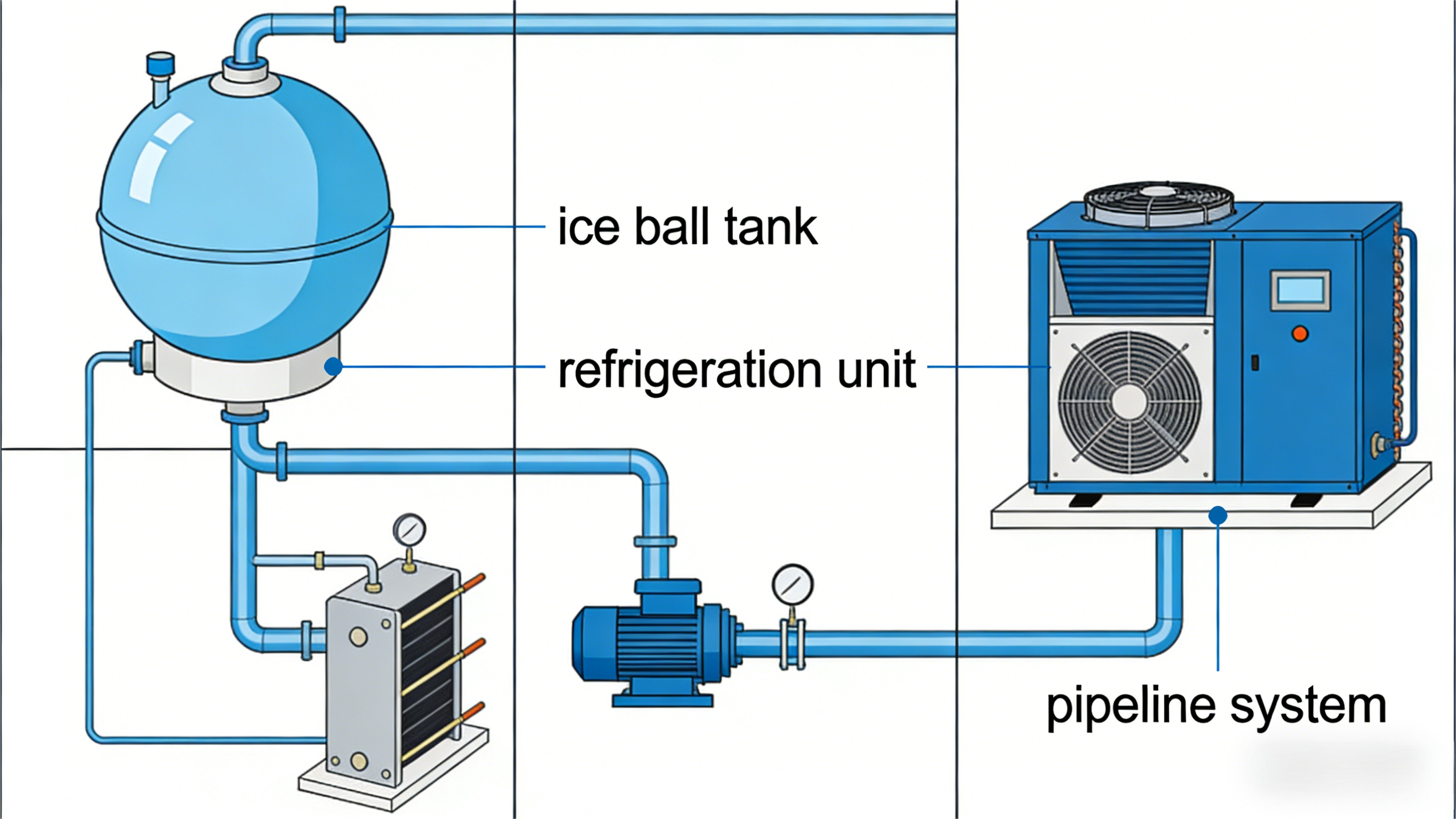
Ice ball thermal energy storage systems are an innovative solution for efficient cooling in various industries. These systems utilize a tank filled with ice balls, which are made from high-density polyolefin material, filled with a high latent heat phase change solution. The coolant flows through the gaps between the ice balls, facilitating efficient heat transfer as it interacts with the stored ice, allowing for effective cooling and energy storage.
Unlike traditional ice storage systems that rely on antifreeze solutions such as saltwater, where the coolant flows through internal tubes and the ice forms on the outer surface, ice ball thermal energy storage systems feature the coolant flowing externally. This maximizes the heat exchange area, leading to higher efficiency in both cooling and energy storage processes. As a result, ice ball thermal storage systems have become increasingly popular in various sectors.
Traditionally, ethylene glycol has been the go-to coolant due to its low viscosity and high specific heat, making it a reliable option for many years. However, over time, the coolant tends to cause corrosion, leading to a drop in system efficiency. As corrosion builds up, rust and dirt often accumulate on the ice balls, reducing the effectiveness of the system.
In response to these challenges, researchers have conducted experiments using flow models for ice storage tanks, adjusting factors like coolant flow direction, inlet velocity, and physical properties. The results indicate that higher inlet flow velocities and lower viscosities of the coolant lead to better heat exchange. Despite these findings, many systems still rely on conventional ethylene glycol, without a more suitable alternative.
Glacier Coolant's LM-4 coolant addresses this issue by utilizing a modified ethylene glycol formulation. This new coolant boasts lower viscosity and enhanced specific heat, while maintaining similar density to traditional ethylene glycol. Most importantly, LM-4 eliminates the corrosion issues that have plagued conventional coolants, ensuring improved efficiency and longevity of the ice ball thermal storage systems. Several companies have already successfully adopted Glacier Coolant’s LM-4 in their operations, reporting notable improvements in performance.
Lower viscosity for enhanced flow and heat exchange
Higher specific heat capacity than conventional glycol
Identical density for direct drop-in compatibility
Zero corrosion protection—eliminating rust scale and maintaining ice ball surface integrity
Glacier Coolant continues to focus on the development of customized coolants tailored to specific systems, further advancing the application of coolants in thermal energy storage solutions. With an unwavering commitment to innovation, Glacier Coolant is setting new standards for both the quality and effectiveness of thermal energy storage systems worldwide.