
Thermal Energy Storage Brings New Flexibility to Cold Storage Operations
As power grids around the world face increasing pressure from peak demand and renewable energy fluctuations, thermal energy storage is emerging as an important tool for flexible energy management. While universities and research institutions have long explored cold storage energy storage technologies, large-scale industrial application is still in its early stages. Glacier Coolant, a high-tech enterprise specializing in advanced refrigerants and phase change materials, has taken a significant step forward by establishing its own cold storage laboratory and conducting systematic tests on thermal energy storage systems for refrigerated warehouses.
At the core of Glacier Coolant’s research is its self-developed phase change material LM-XL-24, with a phase change temperature of -24°C. This formulation is specifically designed for -18°C cold storage facilities, a temperature range widely used in frozen food and pharmaceutical logistics. By integrating phase change thermal storage into conventional refrigeration systems, the company aims to shift cooling load from peak electricity hours to off-peak periods, reducing operating costs and improving grid stability.
Design Challenges and System Selection
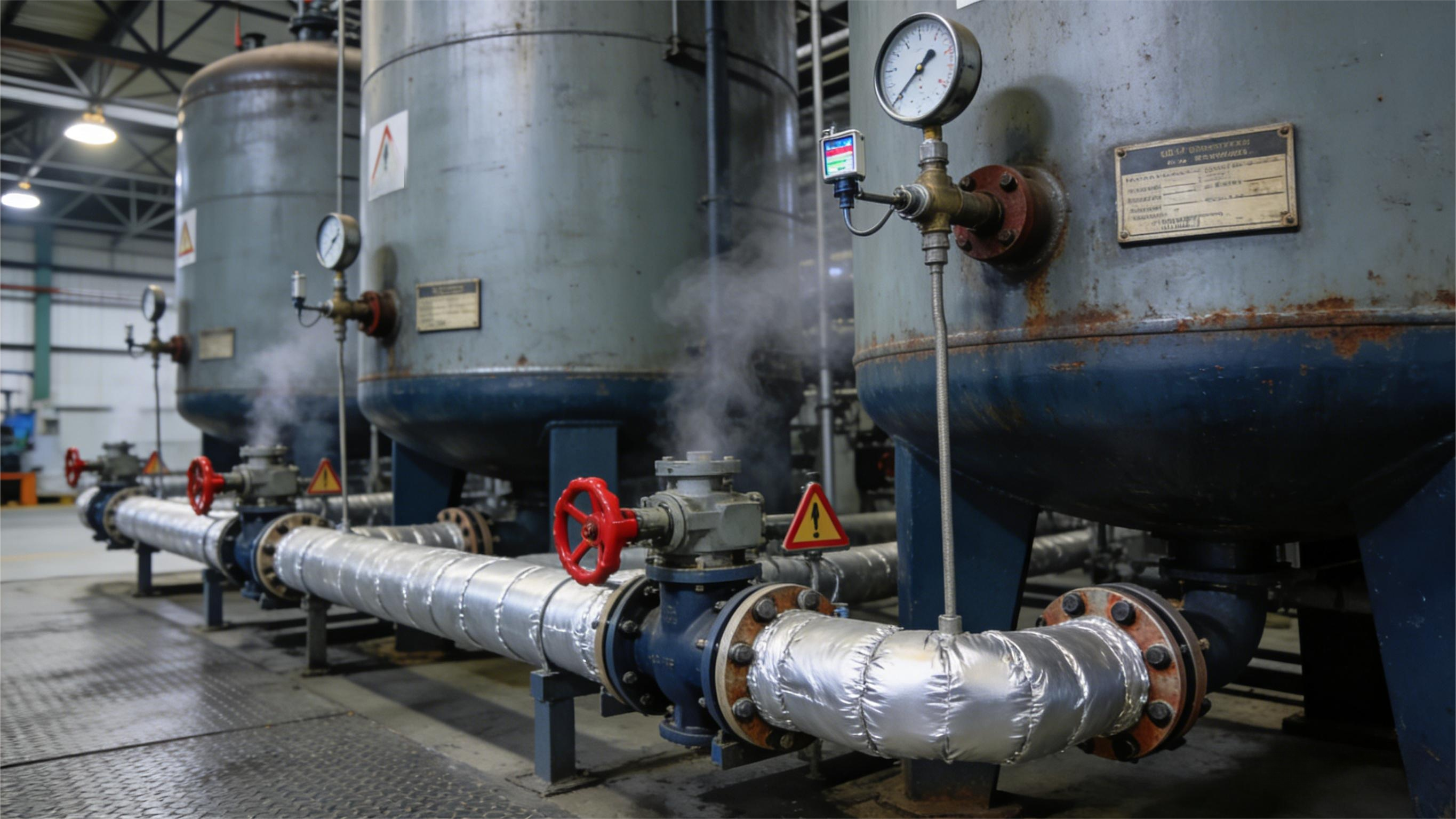
Early-stage system design revealed that the development and retrofit cost of thermal storage cold rooms can be relatively high, especially when extensive system modifications are required. Through practical testing, Glacier Coolant found that secondary refrigeration systems using heat transfer fluids offer the most straightforward retrofit path. In these systems, cooling capacity can be stored and released simply by adding thermal storage tanks to the existing circulation loop, enabling flexible operation with minimal structural change.
For ammonia or fluorocarbon direct expansion cold rooms, the solution is more complex. In many cases, phase change storage panels must be installed inside the storage space. However, not all facilities are suitable for this approach. In standard -18°C pipe-coil cold rooms, the allowable temperature fluctuation is typically within ±2°C. Since phase change materials designed for -20°C storage usually require a cooling source below -25°C for effective charging, compatibility becomes a critical issue. During discharge, the temperature difference between the storage panels and the surrounding air must also be carefully controlled, depending on panel layout and airflow organization.
In fan-coil cold rooms, Glacier Coolant has demonstrated a more flexible strategy. During off-peak hours, the outgoing cold air from evaporators is first directed to cool and charge the storage panels. During peak periods, the same airflow passes through the charged panels to reduce air temperature and maintain stable room conditions. This dual-mode operation allows cooling capacity to be shifted in time without compromising product safety.
Three Technical Keys to Efficient Thermal Storage
Based on extensive testing, Glacier Coolant identifies three critical factors for a high-performance thermal storage system:
First, the selection of an appropriate phase change temperature is essential. The storage material must allow both efficient charging and rapid discharging within a suitable temperature difference range, ensuring stable room temperature control.
Second, the heat exchange design of the storage tank must guarantee uniform and stable charging. Uneven heat transfer not only reduces storage efficiency but also shortens the service life of the system.
Third, for storage panels installed inside cold rooms, the heat exchange structure and airflow organization are decisive. Proper panel placement and air distribution ensure that stored cooling capacity is released evenly and effectively.
Contrary to common perception, Glacier Coolant emphasizes that longer holding time is not the only performance indicator. From a discharge perspective, faster melting indicates stronger cooling output, which is a positive sign of system effectiveness rather than a weakness.
Towards Smarter Cold Storage
With rising energy costs and stricter carbon reduction targets, thermal energy storage is becoming a practical solution for cold chain operators seeking both economic and environmental benefits. Glacier Coolant’s phase change thermal storage solutions provide a new pathway for peak shaving, load shifting, and stable temperature control in refrigerated warehouses.
By combining advanced phase change materials, corrosion-resistant heat transfer fluids, and application-oriented system design, Glacier Coolant continues to push the boundaries of cold storage technology. The company’s laboratory-driven approach demonstrates how industrial innovation can transform theoretical research into reliable, scalable solutions for the cold chain industry.
Founded on pioneering anti-corrosion refrigerant technology, Glacier Coolant is a high-tech enterprise specializing in heat transfer fluids, phase change materials, and secondary refrigeration solutions. With products covering a wide temperature range from ultra-low to high temperature, the company serves industries including cold storage, food processing, pharmaceuticals, chemicals, and data centers.