
Secondary coolant systems require annual sampling and testing throughout their operational lifespan. In accordance with the testing procedures established by Glacier Coolant, each sample must undergo a full performance assessment and formulation analysis to ensure optimal system function.
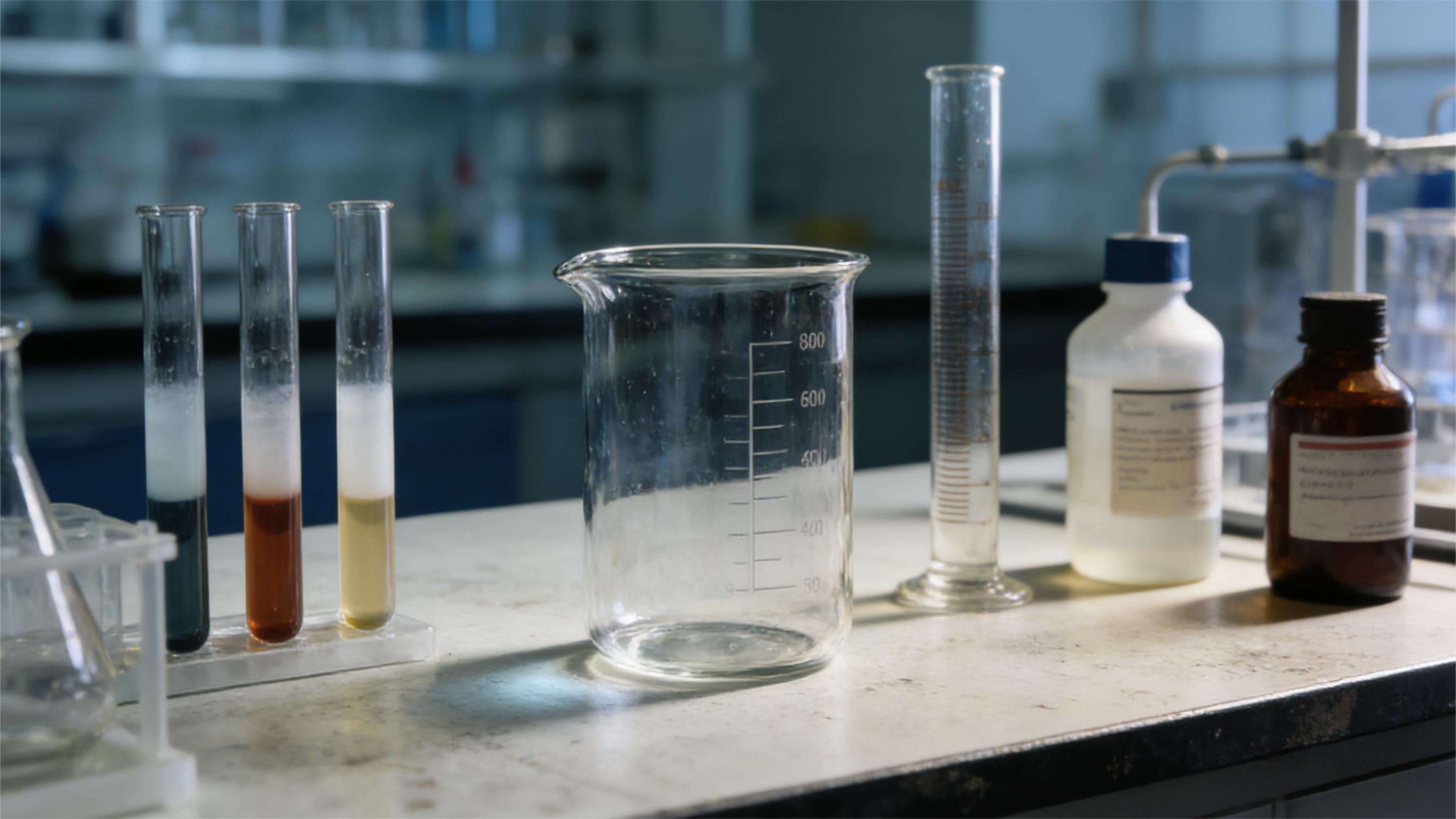
Concentration and Freezing Point Analysis: This test verifies the concentration and freezing point of the coolant, crucial for preventing equipment freezing and undesirable boiling point reduction. In freezing applications, low-temperature coolant can absorb moisture from the air over time, diluting its concentration. Therefore, measuring freezing point and density is the primary step. The measured density is cross-referenced with the coolant's specific freezing point/density chart to determine its current concentration. If dilution is detected, the required amount of active component is calculated and added to restore the specified density and freezing point.
Corrosion Rate and Anti-Rust Performance Evaluation: This test quantifies metal corrosion rates to ensure the longevity of system components. Corrosion rate is defined as the quantified mass loss of a material per unit time in a specific environment. Test coupons made of carbon steel and copper—materials commonly used in freezing system design—are immersed in the coolant sample for 168 hours to assess their corrosion rates.
pH Level Testing: This analysis ensures the coolant maintains sufficient resistance to acidification, supporting its long-term effectiveness and stability.
Specific Heat Capacity Measurement: Conducted according to established standards, this test verifies the coolant's heat absorption and transport capabilities, which are fundamental to its cooling and heating performance.
Thermal Conductivity Assessment: Performed based on set standards, this evaluation confirms the coolant's heat exchange efficiency within the system.
Low-Temperature Viscosity Analysis: This test is critical for ensuring proper fluidity at low operating temperatures. It directly impacts system load, energy consumption, and the correct selection of pumping equipment.
Compositional Analysis: This ensures the coolant formulation remains within specification and is uncontaminated by foreign substances, preserving its designed properties.
Following the adjustments made based on the above tests, the final formulation is analyzed for the presence of harmful ions and metal ion content. This data is essential for establishing and maintaining a detailed coolant history for ongoing system monitoring.
Corrosion Mechanism of Fluoride/Chloride Ions
High Solubility: Fluorine and chlorine are halogens whose ions exhibit exceptionally high solubility, rarely forming precipitates. This means water containing these ions can, through repeated circulation, concentrate into a highly corrosive fluoride/chloride solution, with corrosivity increasing alongside ion concentration.
Strong Permeability: The fluoride ion, due to its extremely small ionic radius, possesses significant physical and chemical permeability. It can penetrate common protective coatings and metal oxide films, reaching the underlying material surface to initiate corrosion.
Potent Depolarizing Effect: "Polarization" refers to resistance in an electrochemical reaction, often caused by the formation of protective layers like oxide or passivation films on metal surfaces, which slow down corrosion. "Depolarization" disrupts or prevents this protective effect, accelerating corrosion. The small, highly permeable fluoride ion can react with nearly all metals. The resulting compounds are often soluble salts that dissociate in solution, regenerating fluoride ions.
Persistence and Difficulty of Removal: Due to their high solubility, fluoride ions are challenging to eliminate from the system. In practice, beyond contributing to acidity, fluoride ions act similarly to a non-consumable corrosion catalyst. Higher fluoride ion concentrations lead to exponentially increased corrosion rates.
Therefore, testing for fluoride and chloride ions is mandatory. If their concentration exceeds specified limits, the coolant must be replaced. Since freezing systems commonly incorporate both iron (steel) and copper components, testing for iron and copper ion content is also necessary for comprehensive monitoring.